
Learn How to Learn
A practical, science-backed system for learning difficult things, remembering more of what you study, and becoming a more effective independent learner.

60% of students say they highlight often or almost always. Unfortunately it is one of the least effective learning strategies.
Buy Learn How to LearnBuilt on established learning science
Retrieval practice · Spaced practice · Interleaving · Elaboration · Metacognition
Course principles draw on research in cognitive and educational psychology. Research references below.
THERE IS A BETTER WAY TO LEARN
Were you ever taught how to learn? I wasn't.
- We just sort of pick it up as we go along at school.
- We reread passages of text, because that feels useful. But it creates a familiarity with the words without providing a deep understanding of the topic.
- We highlight important phrases, because that seems as though it should help us remember. It makes the book look prettier, but highlighting alone is an exceedingly weak learning strategy.
- We make elaborate notes because our intuition tells us this is the path to understanding. But passively copying notes onto a page does not provide an understanding of the concepts. It's not enough.
- We end up wasting a lot of time and making very little progress because we were never taught what our brains need to learn.
Fortunately, decades of research in cognitive science and educational psychology have uncovered much better ways to learn. The principles are surprisingly simple and once you you understand them , you can apply them to almost anything.
Learning is a skill and you can improve
Learn How to Learn gives you an evidence-based system for understanding difficult material, remembering more of what you study, and learning more effectively.
Buy Learn How to Learn
By the end of this course, you’ll know how to…
- Remember more of what you read and study
- Understand difficult ideas instead of just recognising them
- Use retrieval and spacing without overcomplicating your study routine
- Choose better strategies for different kinds of learning
- Tell the difference between familiarity and real understanding
- Build a personal learning system you can use again and again
HOW THE COURSE WORKS
You shouldn't binge this course
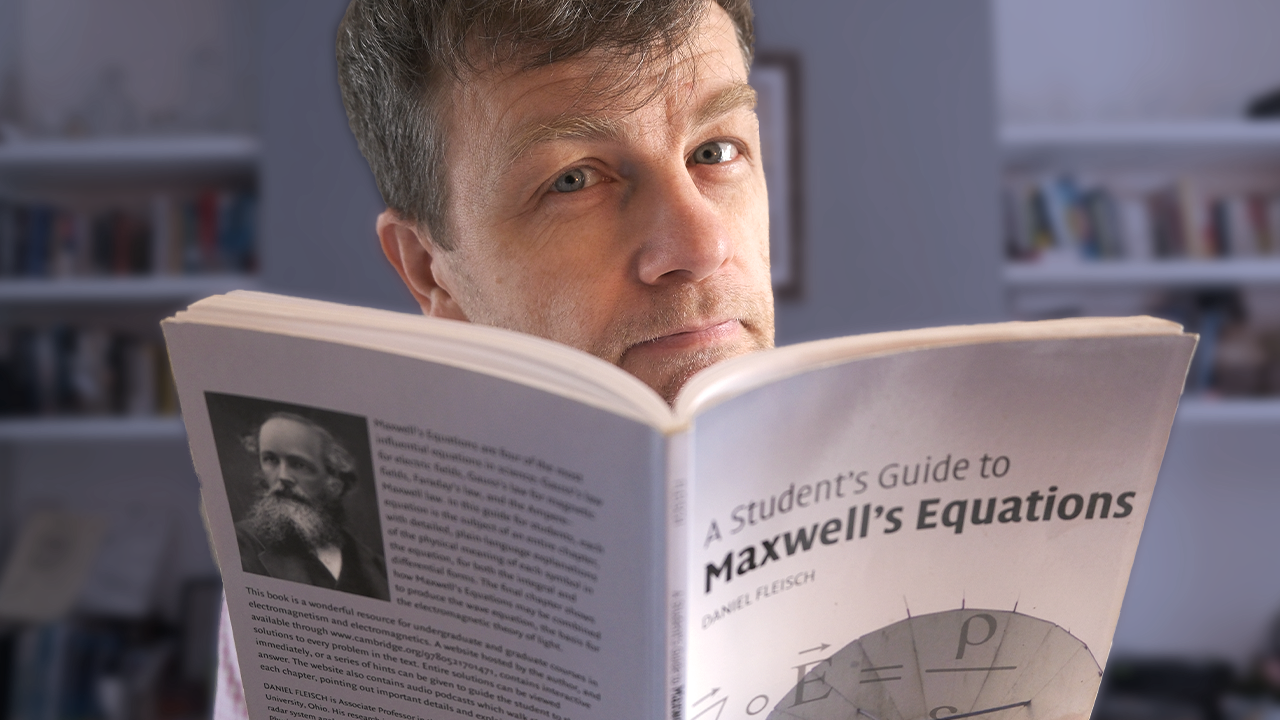
A practical course in the science of learning
Learn How to Learn is a short course designed using research from cognitive science and educational psychology.
You’ll work through concise lessons on memory, retrieval practice, spacing, elaboration, interleaving and metacognition. You can then apply these concepts to something you want to learn.
It isn’t designed to be binged. The lessons are deliberately short so you can pause, reflect, practise and come back.
- Short, focused video lessons
- Practical exercises and reflection
- A personal learning plan you build as you go
What You'll Learn

PART 1
Foundations
1. Attention & Focus
How to create the conditions in which learning can actually happen.
2. Memory & Understanding
How memory works, why familiarity can mislead you, and how to make new knowledge meaningful.

PART 2
Effective Learning
3. Retrieval & Spacing
How to strengthen memory by recalling information and reviewing it at the right intervals.
4. Elaboration, Chunking & Dual Coding
How to connect ideas, simplify complexity and build richer understanding.

PART 3
Reflection and Personalisation
5. Metacognition
How to judge what you really know and adjust your approach.
6. Build Your Personal Learning System
Turn the principles into a practical plan for something you want to learn.

Learn How to Learn is for you if…
- You read or study a lot but forget too much of it
- You spend hours making notes without knowing whether they’re helping
- You’re trying to teach yourself a difficult subject or skill
- You want to understand why effective learning techniques work
- You want a practical system rather than another collection of study hacks
- You enjoy learning and simply want to get better at it
NICE TO MEET YOU
I'm Giles
I've spent years making videos on YouTube about learning, learning science, and books for an audience of hundreds of thousands.
I've had quite a varied career: radio presenter, financial journalist and then I trained as a physicist. The common factor for all of those was the need to understand and master difficult topics.
But about 10 years ago I realised something. I'd never been taught how to learn. That's when I reflected on my own learning process. How did I actually learn, why did I understand some topics better than others, what processes were taking place in my head as picked up (or failed to) a new topic? And that led me to the decades of research in cognitive science and educational psychology.
This course came out of that that journey: in it I have tried to distill the research into practical, evidence based learning techniques that you can use to learn and understand anything. They are simple, but mastering them takes practice. The insight they will provide into how you learn makes that practice worthwhile.
I'm very excited to share them with you and I hope you find them as useful as I do.

What students say
“I already knew or had heard about many of the learning techniques, but I hadn’t managed to connect them in a way that turned them into a complete skill for learning. The course gives me a lot of structure and new ways of understanding learning.”
Carolina A. — Udemy student
Translated from Spanish
Bonga W. — Udemy student
“I appreciate how the course is structured — it makes you really engage with the content.”
Dimitri P. — Udemy student
“Clear and concise, which is appreciated.”
Kätlin L. — Udemy student
“I like clear language.”
Ready to learn how to learn?
Learn How to Learn
30-day money-back guarantee
If you try the course and decide it isn’t useful for you, contact me within 30 days and I’ll refund your purchase.
Is this course only for students?
How long is the course?
Do I need any special apps or software?
What if I already know about spaced repetition or retrieval practice?
What if the course isn’t right for me?
Research behind the course
Learn How to Learn draws on established research from cognitive science and educational psychology. These are some of the key sources behind the techniques covered in the course.
Dunlosky, J., Rawson, K. A., Marsh, E. J., Nathan, M. J., & Willingham, D. T. (2013).
Improving Students’ Learning With Effective Learning Techniques: Promising Directions From Cognitive and Educational Psychology.
Psychological Science in the Public Interest, 14(1), 4–58.
A major review of ten commonly used learning techniques, including retrieval practice, distributed practice, interleaving, rereading and highlighting.
Read the paper
Weinstein, Y., Madan, C. R., & Sumeracki, M. A. (2018).
Teaching the Science of Learning.
Cognitive Research: Principles and Implications, 3, Article 2.
An open-access overview of six evidence-based strategies: spaced practice, interleaving, retrieval practice, elaboration, concrete examples and dual coding.
Read the free paper
Roediger, H. L., & Karpicke, J. D. (2006).
Test-Enhanced Learning: Taking Memory Tests Improves Long-Term Retention.
Psychological Science, 17(3), 249–255.
A classic study demonstrating the long-term benefits of retrieval practice compared with repeated study.
View the research
Cepeda, N. J., Pashler, H., Vul, E., Wixted, J. T., & Rohrer, D. (2006).
Distributed Practice in Verbal Recall Tasks: A Review and Quantitative Synthesis.
Psychological Bulletin, 132(3), 354–380.
A large meta-analysis of the spacing effect, drawing on 317 experiments.
View the research
For an accessible introduction to the research, I especially recommend Teaching the Science of Learning, which is freely available online.